Selected plant species in the
Heidenreichsteiner Moor Nature Reserve

Detailaufnahme einer Moorpflanze
©Angelika Ebhart, Naturpark Heidenreichsteiner Moor

Sundew

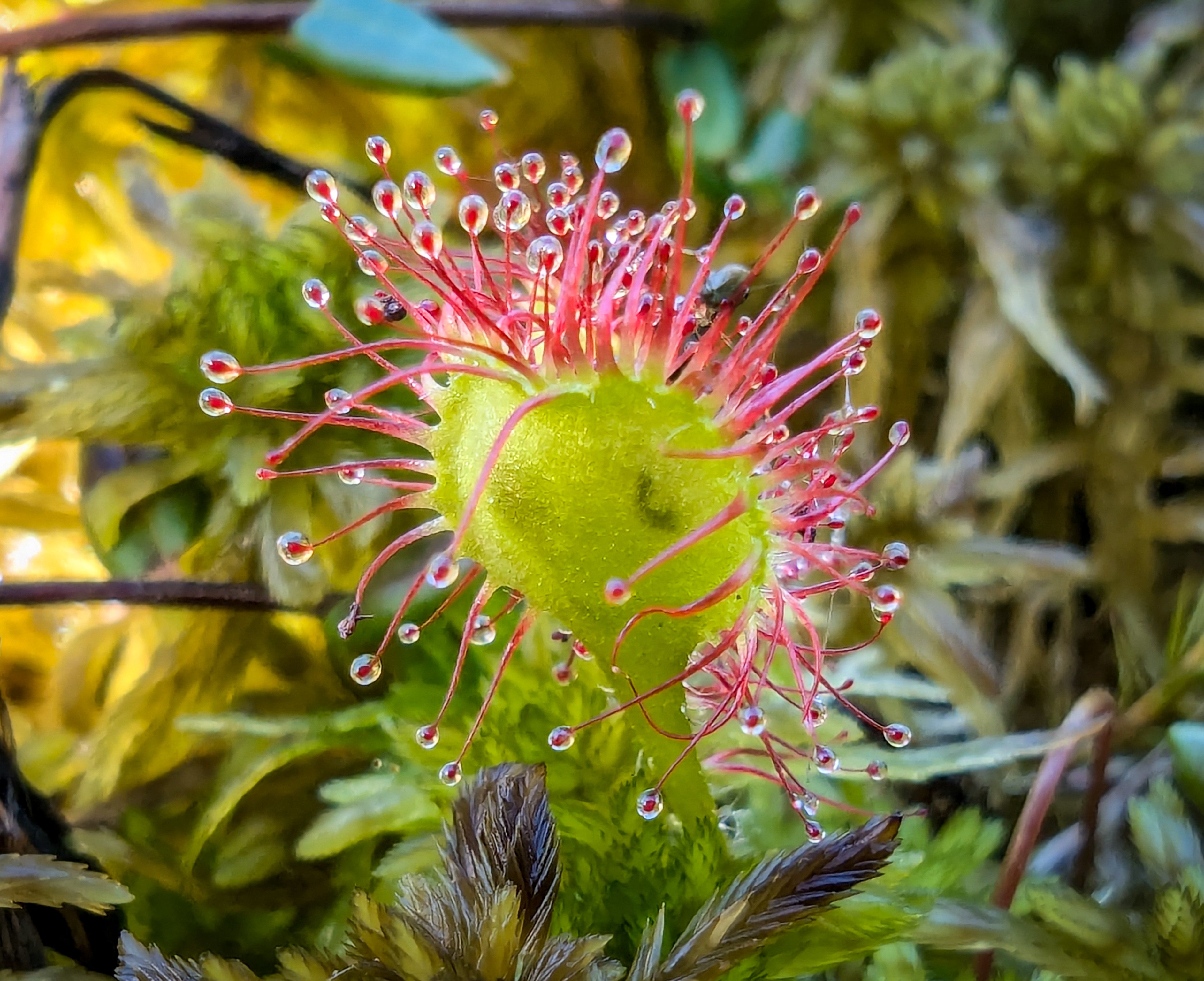
The round-leaved sundew (Drosera rotundifolia), which is often difficult to spot at first glance, meets its nitrogen requirements by trapping insects. The plant’s round leaves are covered with long-stemmed glandular hairs, at the tips of which are sticky droplets that look like dew. This is a fragrant, viscous trap mucus to which insects stick. Once an insect is trapped, it is held fast by the tentacle-like appendages. With the help of a fluid secreted by the glands, the insect is digested and the nutrients are absorbed through the leaf. In the past, sundew was often used as a medicinal plant to treat coughs; today, the species is under strict conservation protection due to the destruction of its habitat.
Nahaufnahme eines Mooses
©Angelika Ebhart, Naturpark Heidenreichsteiner Moor

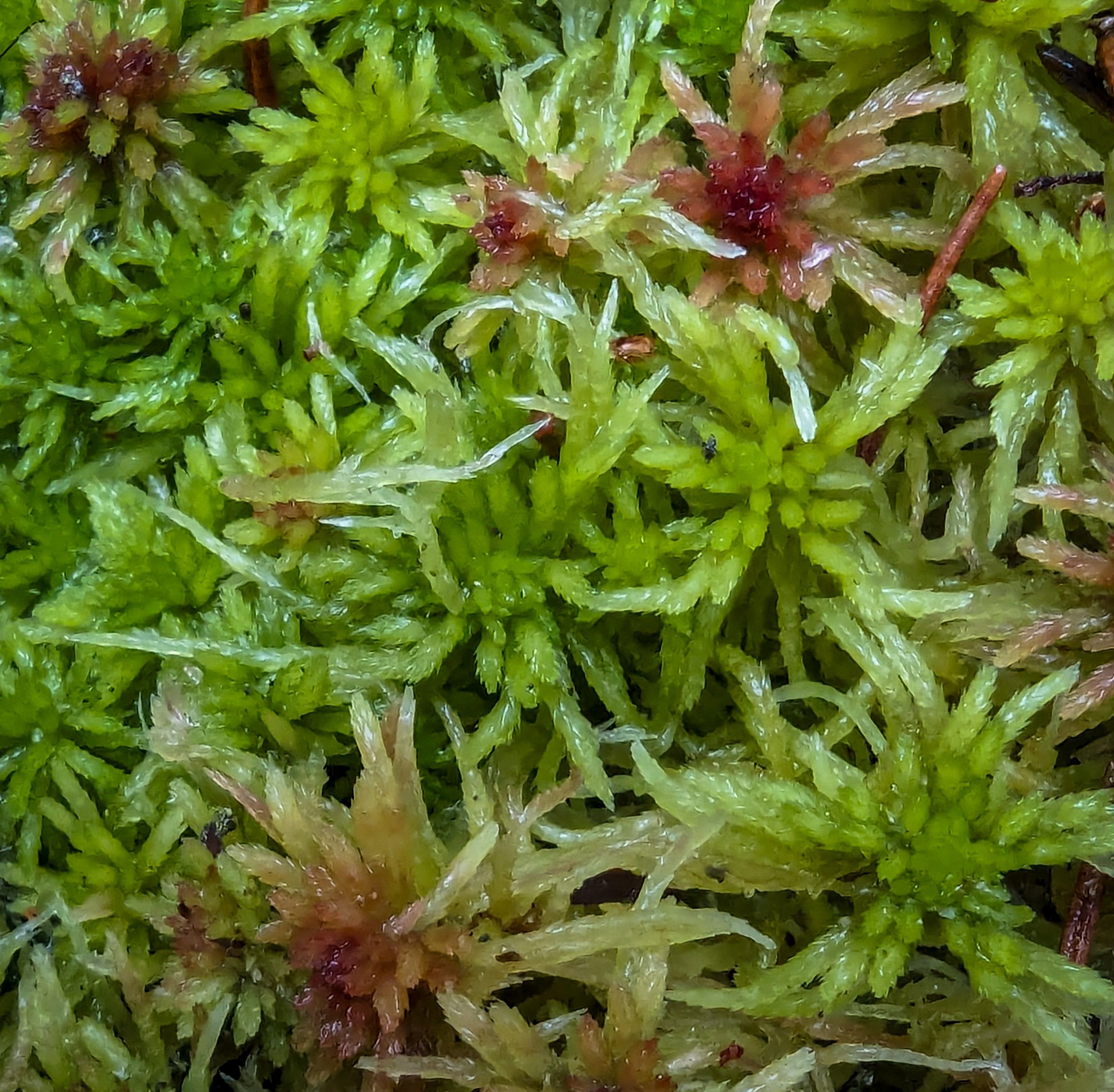
Sphagnum mosses

Peat mosses (Sphagnum sp.) are among the most important plants in high moors. They grow rapidly and make up a large proportion of the peat layer in high moors. Sphagnum moss cushions act like a giant sponge, as the mosses can store 20 times their dry weight in water thanks to specialised cells in their leaves. Following rainfall, they are capable of raising the water level by over 20 cm within 48 hours. Furthermore, these plants have the ability to release hydrogen ions in exchange for nutrient salts. This leads to acidification of the site, which only a few other specialist plant species can tolerate – providing good protection against plant competition. Sometimes, brown spore capsules can be seen at the tips of individual moss plants, from which the mature spores are released.

Bild einer Pflanze mit weißen Fruchtständen, die aussehen wie Wattebüschel
©Angelika Ebhart, Naturpark Heidenreichsteiner Moor

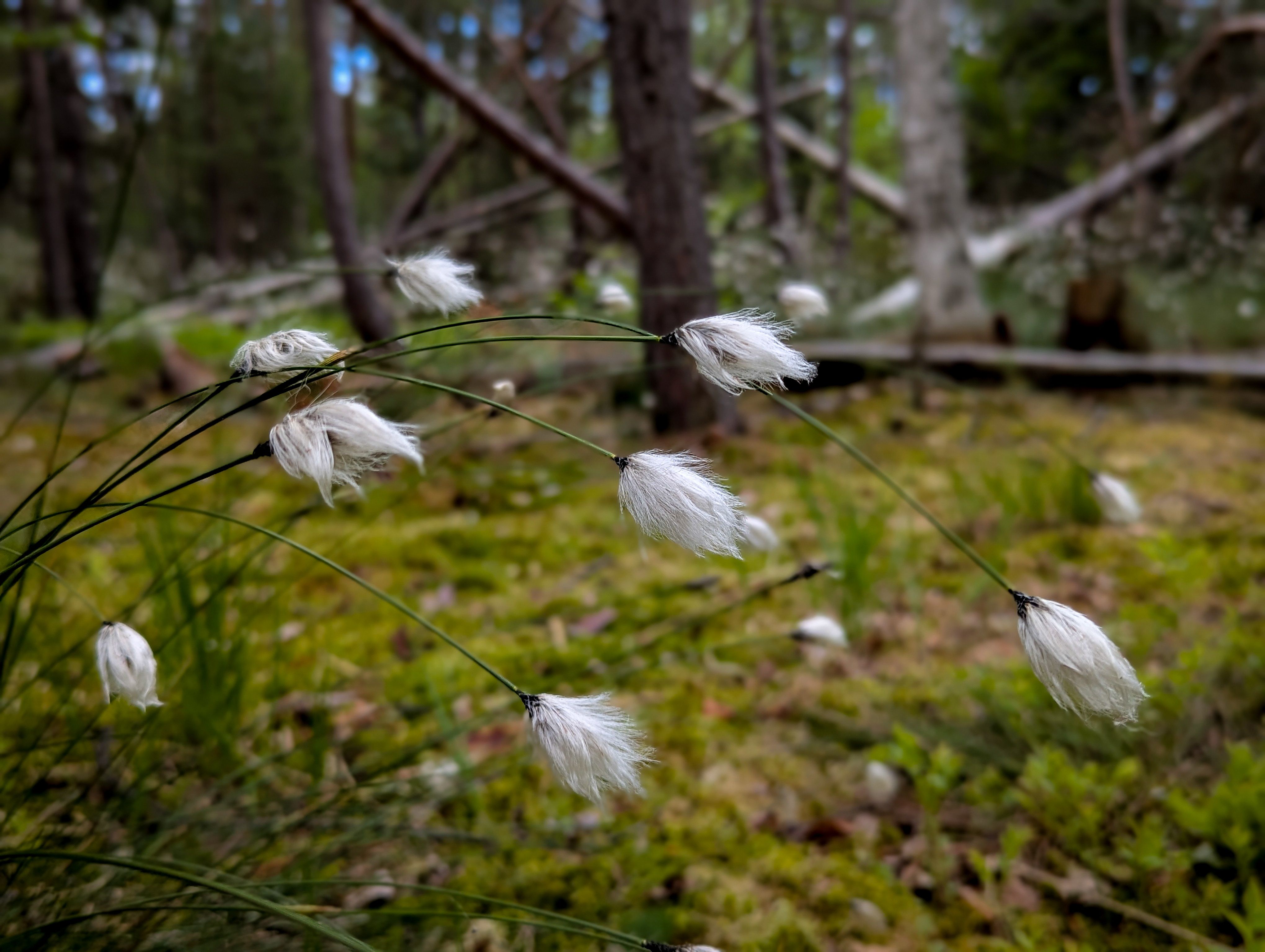
Wool grasses

Cotton grass (Eriophorum sp.) is one of the most striking plants found in the moorland. With their white, cotton-like inflorescences, they lend moorland landscapes an almost fairy-tale-like appearance in early summer. These plants belong to the sedge family and are perfectly adapted to the nutrient-poor, wet and acidic conditions of the moor. In the Heidenreichsteiner Moor, the narrow-leaved cottongrass (Eriophorum angustifolium) and the sheathed cottongrass (Eriophorum vaginatum) are found.

Eine Pflanze mit weißen Blüten
©Angelika Ebhart, Naturpark Heidenreichsteiner Moor

Marsh hellebore

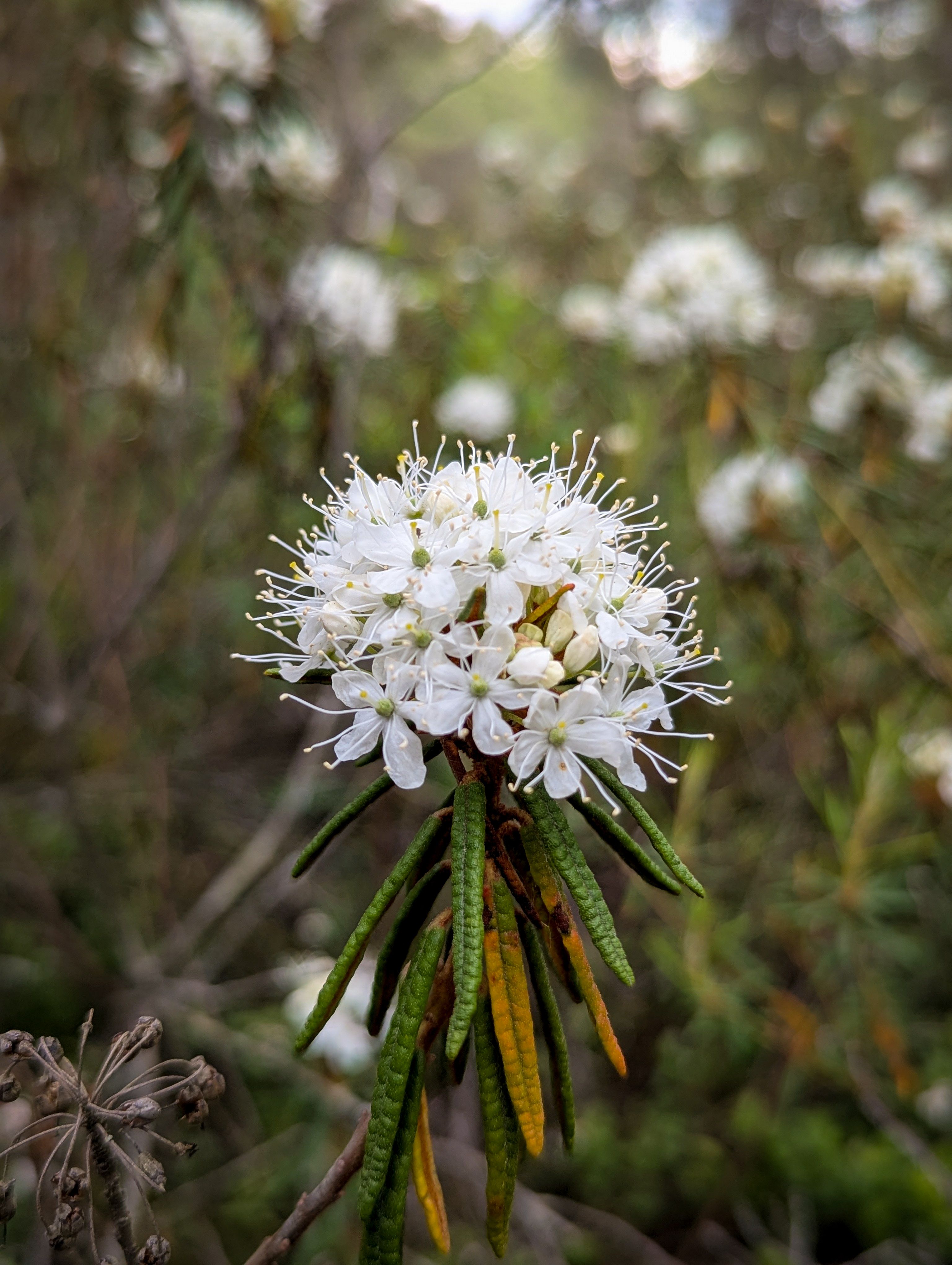
A distinctive shrub found mainly in open areas of bog woodland is the marsh rhododendron (Rhododendron tomentosum). This plant, which grows to a height of about 1 metre and has very narrow, lance-shaped leaves, is particularly striking during its flowering period from May to July, thanks to its white umbels of flowers. In addition to the flowers, its intense fragrance is also a distinctive feature. The marsh rhododendron is a glacial relict, primarily found in northern regions, and is relatively rare in our part of the world. In many countries, the species is therefore also listed on the Red List of endangered plant species. In the past, this poisonous plant was also used as an ingredient in brews due to its intoxicating effect.

Nahaufnahme einer Moorpflanze mit rosa Blüten
©Angelika Ebhart, Naturpark Heidenreichsteiner Moor

Rosemary Heath

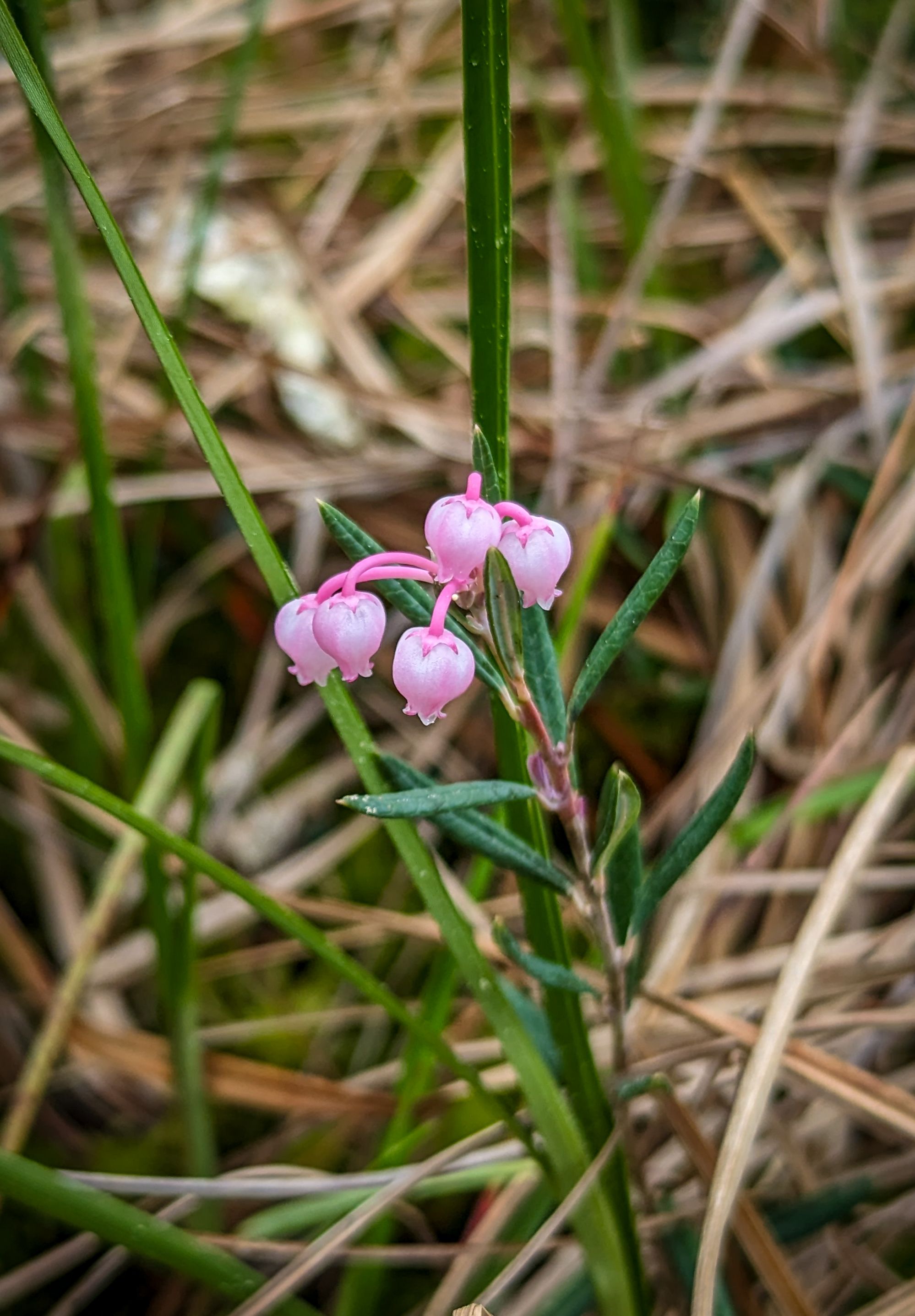
Despite its name, the rosemary heath (Andromeda polifolia) is not related to the well-known culinary herb, but belongs to the heath family. However, its narrow, evergreen leaves are reminiscent of rosemary, which is how it came to be named. In late spring, it is adorned with delicate, pink, bell-shaped flowers, which can be seen in the Heidenreichstein Moor from Prügelstag.

Hellrosa Beeren auf einem bodendeckenden Strauch mit kleinen Blättern
©Angelika Ebhart, Naturpark Heidenreichsteiner Moor

Cranberry

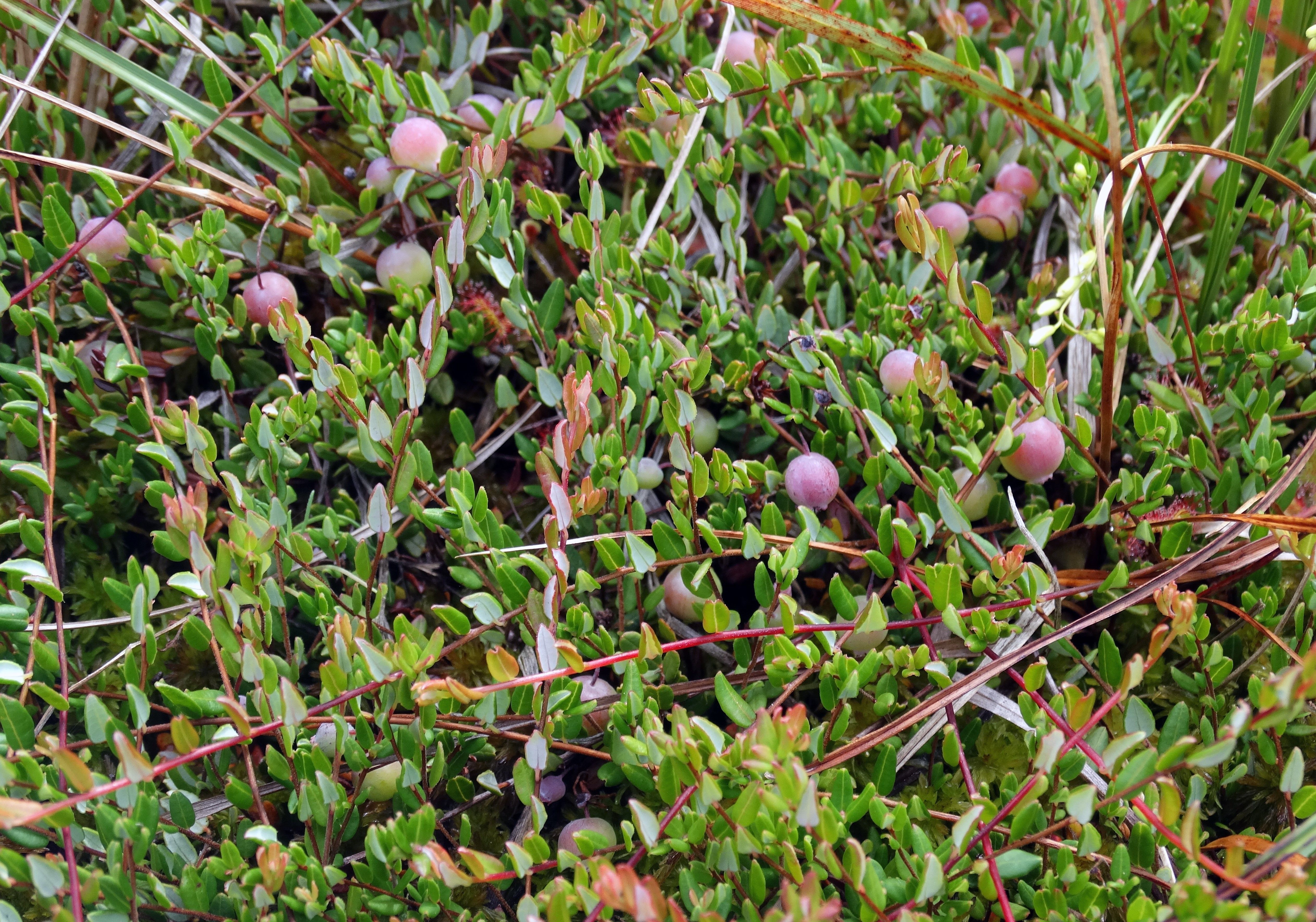
The mooseberry (Vaccinium oxycoccos), a relative of the cranberry and the lingonberry, also belongs to the heath family. It grows as a low, creeping dwarf shrub and produces slender, evergreen shoots that spread across the mossy ground. Its delicate, pink flowers are particularly striking; in late summer, these develop into bright red berries.